Cefalù from Palermo
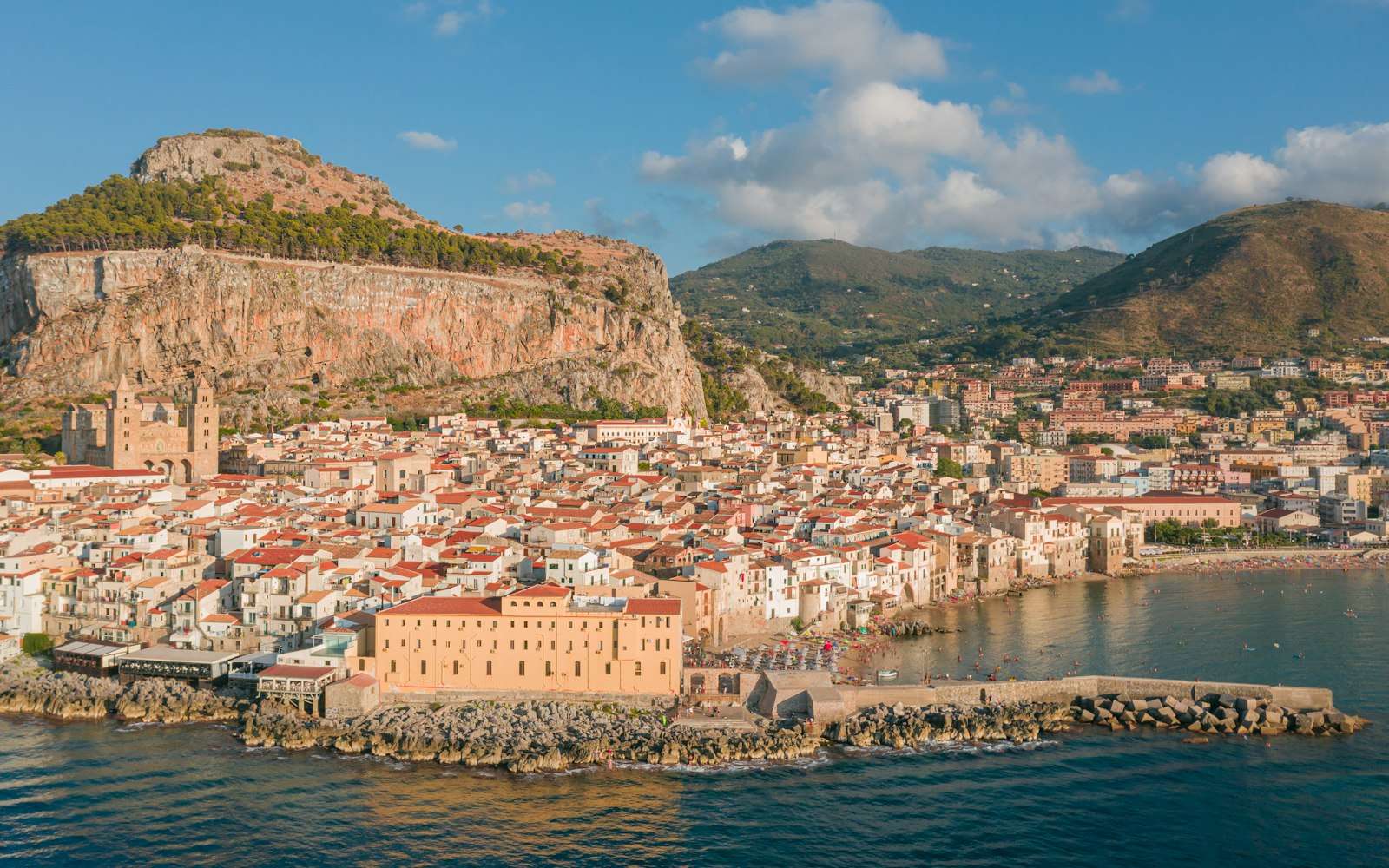
An hour along the coast, a Norman cathedral holds the finest Christ in Sicily under a crag the Greeks fortified, with a real sand beach at the town’s feet. Climb the rock before the heat; the mosaic waits in the cool.
The short version
- Regional trains run Palermo Centrale to Cefalù in 45–60 minutes at steady frequency and small fares — the line hugs the Tyrrhenian per the alarm’s seat assignment; times at trenitalia.com.
- La Rocca — the 270-meter crag over the town — climbs by stepped path past the megalithic Temple of Diana and the Norman upper fortifications for a few euros’ entry: 45–60 minutes up, the coast-both-ways panorama at the top, and the alarm’s before-the-heat rule written by the shadeless path itself.
- The cathedral is Roger II’s 12th-century thanksgiving, part of the Arab-Norman UNESCO ensemble shared with Palermo and Monreale — and its apse Pantocrator, gold-grounded and gaunt-eyed, holds the finest-in-Sicily title this page states plainly; entry runs donation-to-modest with the cloister and towers ticketed separately.
- The old town’s lanes deliver the supporting cast at strolling pace: the Porta Marina’s arch framing the sea, the lavatoio medievale’s stone washhouse fed by its spring, and the fishermen’s quarter’s photogenic decay.
- The beach is the honest rarity — a long crescent of actual sand inside the town itself, lidos and free stretches alternating, with the old town’s skyline as the swim’s backdrop.
- Cinema Paradiso shot key scenes here, which the town notes without theming itself; the evening passeggiata along the front is the older tradition still running.

Getting there
Palermo Centrale’s Messina-line regionals make Cefalù the easy coastal escape — turn up, validate, sit left for the sea. The station lands ten minutes from the old town; La Rocca’s path gate sits just above the main corso. The alarm’s sequencing is the whole plan: rock in the morning cool, cathedral in the midday shade, beach in the afternoon — run in that order the day has no friction at all. Evening trains return late enough for the passeggiata and a granita before boarding.
The day
Climb first: the stepped path switchbacks past the Temple of Diana’s cyclopean stones to the crenellated upper walls — the town’s terracotta wedge below, the coast running both ways, and the cathedral’s twin towers foreshortened into the postcard, banked before the sun takes the path. Descend to the cathedral as the heat arrives: the Pantocrator fills the apse with the concentrated gold the Normans’ Byzantine masters brought — smaller than Monreale’s acreage, finer in the face, per this page’s plain statement — with the cloister’s carved capitals as the quiet second act. Lunch runs seafood in the lanes or on the front — pasta con le sarde by regional loyalty. The afternoon is the beach’s: real sand, a swim with the old town behind you, and the lido-or-towel economics by temperament. The lavatoio, Porta Marina, and a slow gelato circuit fill the cooling hours; the evening train carries you back along the same sea, right side now.
When to go
April to June and September to October run the full sequence in comfort — the Rocca’s climb temperate, the sea swimmable at the edges, the lanes unclogged. July–August is beach-town Sicily at capacity: the climb moves to first light, the cathedral becomes the midday refuge it was built to be, and the sand does the heavy lifting. Winter strips the lidos and half the trattorie but leaves the mosaic, the rock, and the washhouse in shoulder-season quiet — a fine day for the church-and-climb traveler with a jacket. The alarm’s morning-rock rule holds in every month the sun does.
Frequently Asked Questions
How hard is the La Rocca climb?
A steady stepped path — 45 to 60 minutes to the top fortifications with the Temple of Diana at the halfway ledge. No technical anything, but no shade either: the alarm’s early rule, water, and real shoes are the whole kit. The gate keeps its own seasonal hours.
Is the Pantocrator really finer than Monreale’s?
This network documents both and says it plainly: Monreale (from Palermo) wins on overwhelming acreage; Cefalù’s apse wins on the single face — earlier, tauter, and more humane in the eyes. Mosaic pilgrims see both and argue happily forever.
Which beach section should I use?
The free stretches cluster toward the old town’s end — arrive early for towel space in season — while the lidos rent the full apparatus westward. The swim with the medieval skyline behind you is identical from either; that backdrop is the beach’s whole argument.
Cefalù or Monreale as the Palermo day out?
Different scales: Monreale is a half-day mosaic pilgrimage in the hills; Cefalù is a full coastal day of climb, church, and sand. The ensemble ticket of Arab-Norman Sicily arguably wants both; with one day and a beach mood, Cefalù is the fuller trip.
What’s the washhouse about?
The lavatoio medievale — a stone staircase descending to spring-fed basins where the town laundered into living memory — free, thirty seconds from the corso, and the best two-minute time capsule in town. The spring still runs cold through it.