Palermo Day Tours
I’m Serious Day Tour Man AI, your day trip expert. Ask me anything — where to go, how to get there, and what’s actually worth your day.
Palermo’s day-trip crown jewel sits eight kilometers away: a cathedral so covered in gold mosaic that the numbers stop meaning much. The rest spreads across western Sicily — a Norman beach town an hour east by train, a Greek temple standing unfinished and perfect in empty hills, a medieval mountain town with the island’s most famous pastry shop, and the Valley of the Temples in reach for the committed.
One tourism question gets an honest answer below, because half the visitors asking about Corleone are looking for a movie that was filmed somewhere else.
Here’s what’s worth a day, with real times and honest trade-offs.
Popular Day Trips
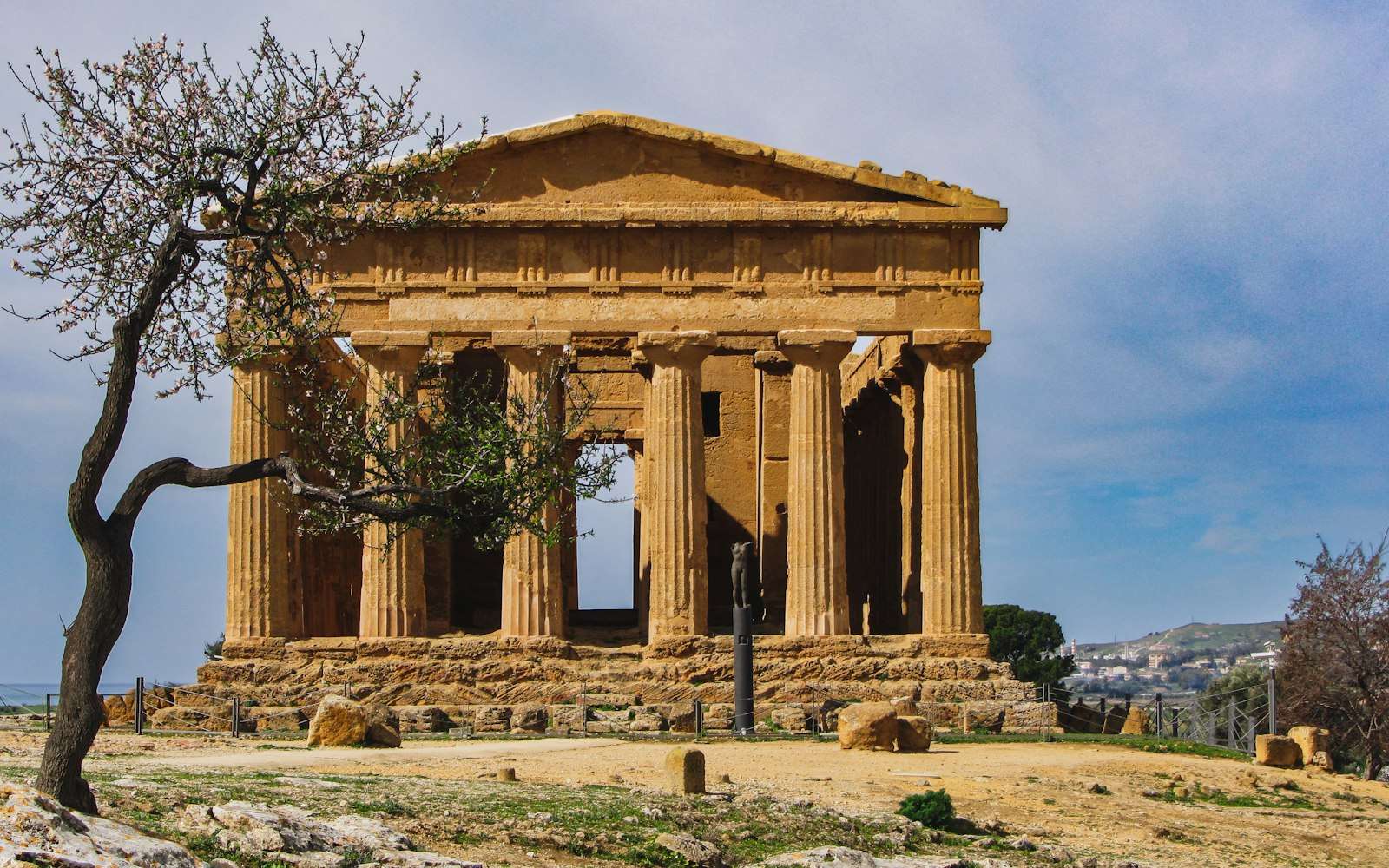
Valle dei Templi
The Long Ride to Agrigento, Concordia at Golden Hour
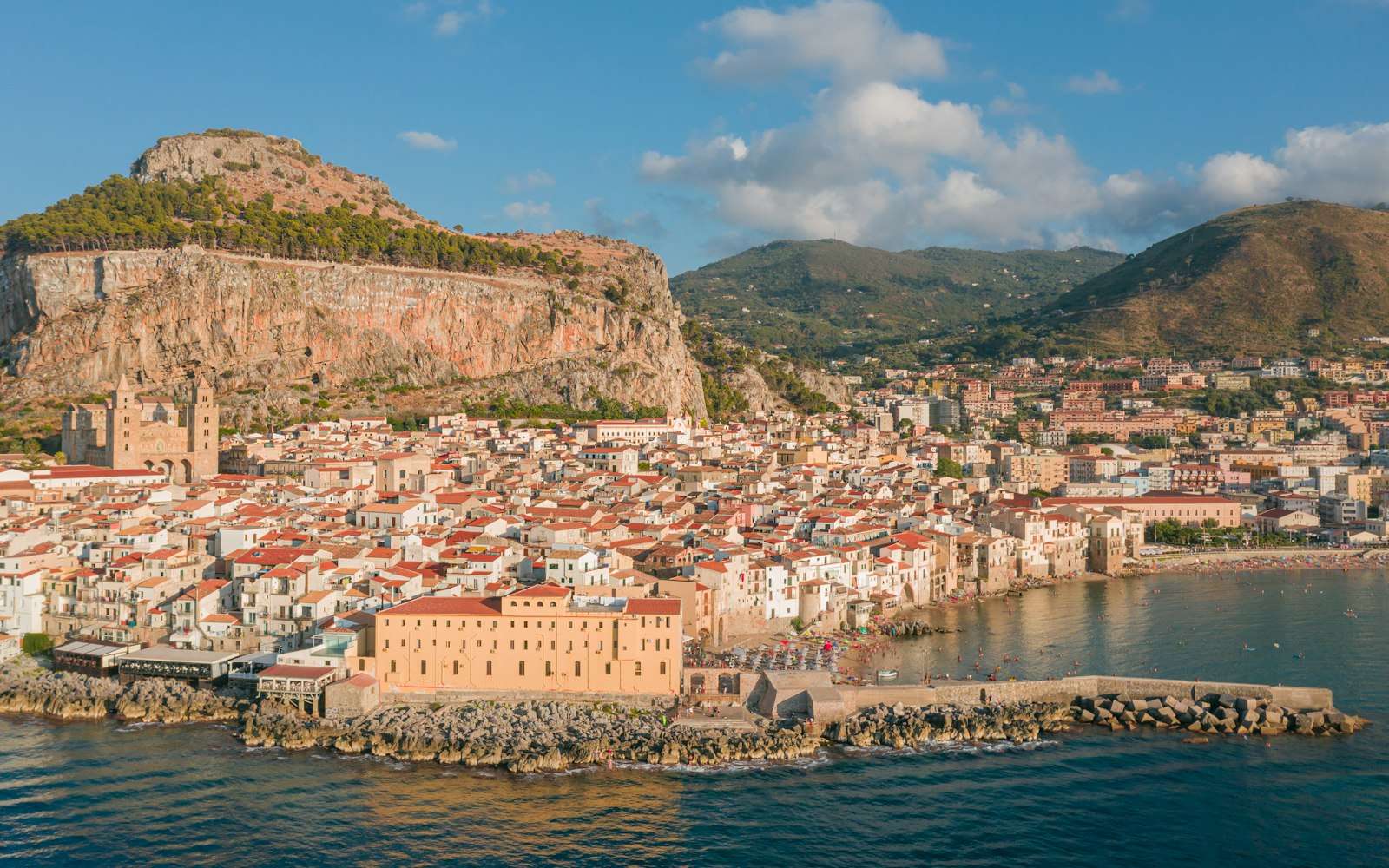
Cefalù
The Coastal Train, La Rocca Before the Heat
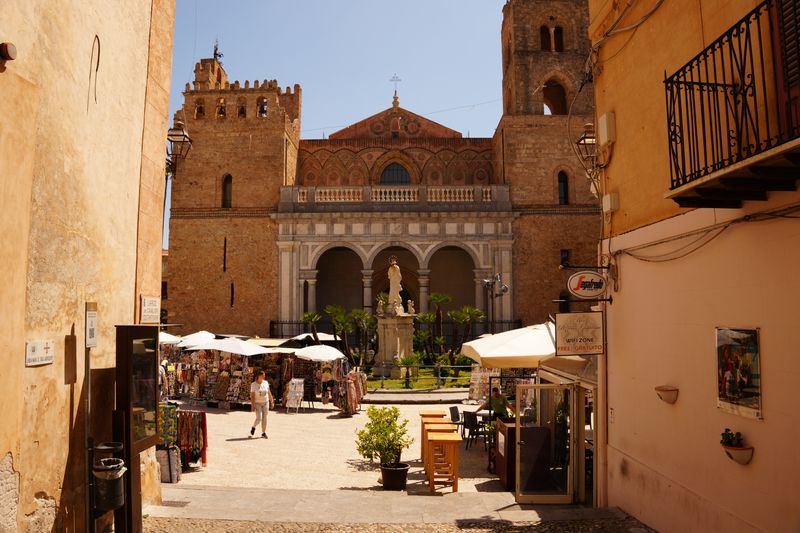
Monreale
The 389 Bus, Six Thousand Square Meters of Gold
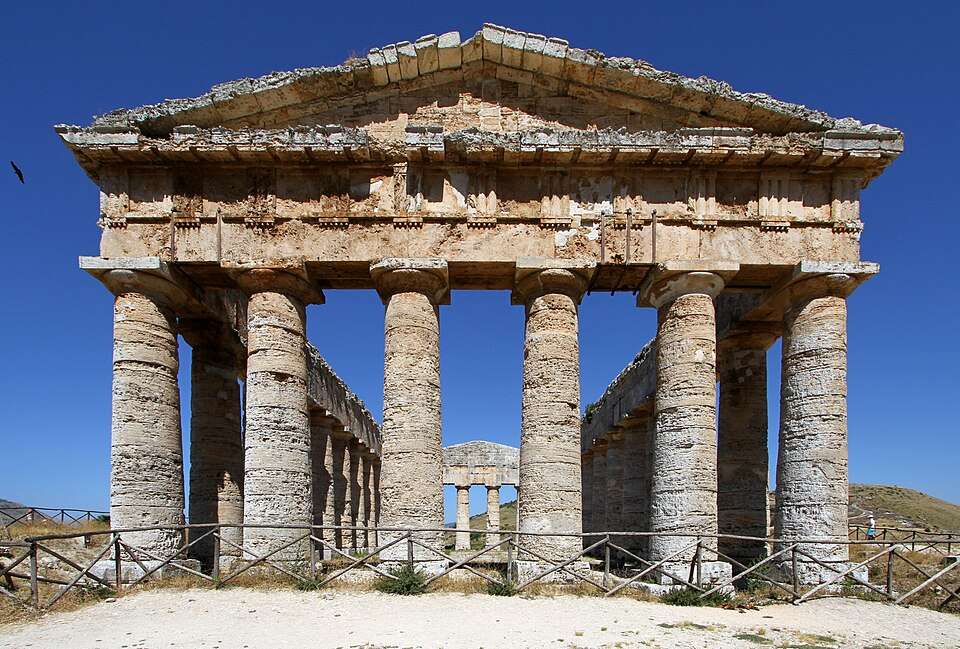
Segesta
The Temple Never Finished, the Theatre on the Summit
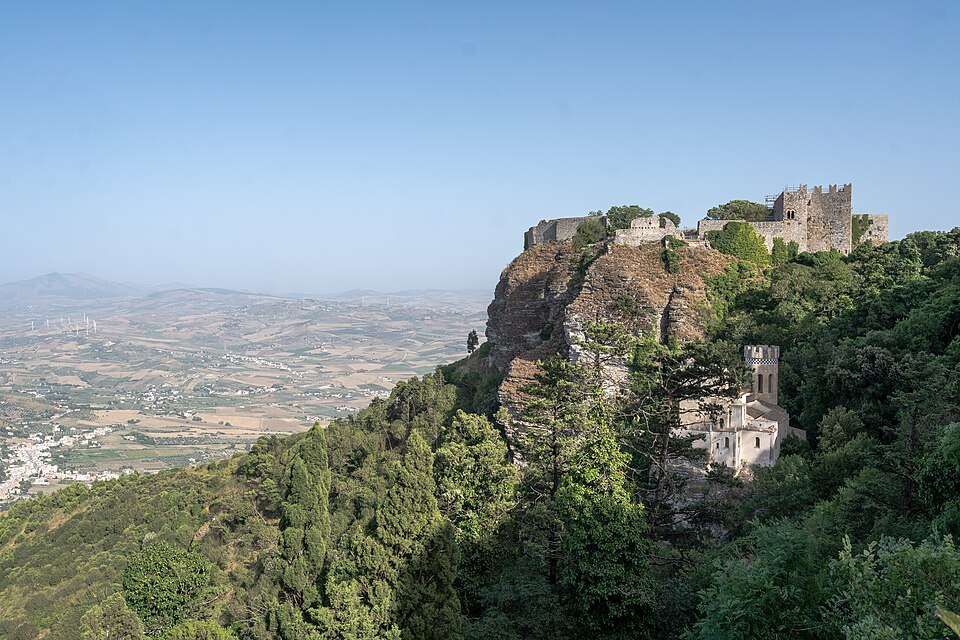
Erice
The Cable Car When the Wind Allows, a Town in the Clouds
Monreale — The Golden Cathedral
The essential trip is barely a trip: eight kilometers uphill by city bus, taxi, or tour — about twenty minutes. Monreale’s cathedral is the summit of Norman Sicily’s Arab-Byzantine fusion: 6,400 square meters of gold-ground mosaic, a Christ Pantocrator filling the apse with vast outstretched hands, and an Old Testament cycle running the nave like a golden comic strip, legible from the floor.
Two additions matter. The cloister holds 228 paired columns with no two capitals alike — the Islamic craftsmen’s signature on a Christian courtyard — and the rooftop terraces give the Conca d’Oro panorama down to Palermo and the sea.
One pairing note: see Palermo’s own Cappella Palatina on a different day if you can. Back-to-back gold saturates the eye, and each needs to land separately. Half a day covers Monreale, and morning light on the apse is the connoisseur’s slot.
Read the full Monreale day-trip page.
Cefalù — The Norman Beach Town
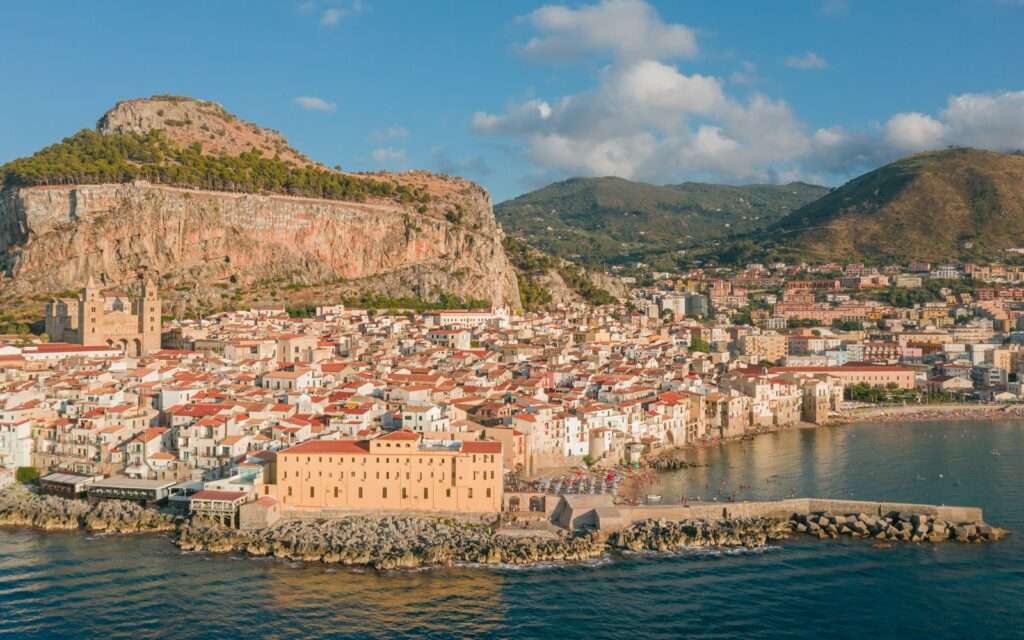
An hour east by train, Cefalù compresses the Sicilian day into walking distance from its station: a Norman cathedral of its own — the Pantocrator here predates Monreale’s, and partisans argue it’s the finer face, a debate best settled by visiting both — plus a medieval old town of stone lanes running straight into a long sand beach, the photogenic medieval washhouse carved into the rock, and La Rocca, the crag above town whose 45-minute climb buys the postcard shot of cathedral, rooftops, and sea in one frame.
The calendar: summer packs the beach and lanes, early trains and shoulder months restore them, and the town works year-round in its cathedral-plus-lunch version. It’s the best single train day from Palermo, and the right pick for mixed groups — swimmers and mosaic people part at the duomo and reunite for lunch.
Read the full Cefalù day-trip page.
Erice & the West — Temple, Mountain, Salt
The western circuit works best as a tour or a drive. Segesta comes first, an hour out: a Doric temple of the 5th century BC standing alone in green hills. It was never finished — the columns were never fluted, and no one knows why — and it’s more moving for it. The Greek theater carved into the hilltop above holds a view the ancients clearly chose on purpose.
Then Erice: a medieval triangle of a town at 750 meters on its own mountain, with cobbles polished by centuries, sixty churches for a few hundred residents, and a Norman castle on the old Phoenician clifftop. Clouds roll through the lanes and clear again within minutes. The cable car from Trapani is the scenic ascent when it’s running. Inside the town waits the pilgrimage within the pilgrimage: Maria Grammatico’s pastry shop, whose genovesi and almond sweets carry a convent-taught history the shop fully honors.
Finish on the descent with Trapani’s salt pans: windmills, pink-tinged evaporation pools, flamingos in season, and famous sunsets. It’s the fullest single day from Palermo and the west’s whole case in one loop.
Read the full Erice day-trip page.
Agrigento — The Valley of the Temples
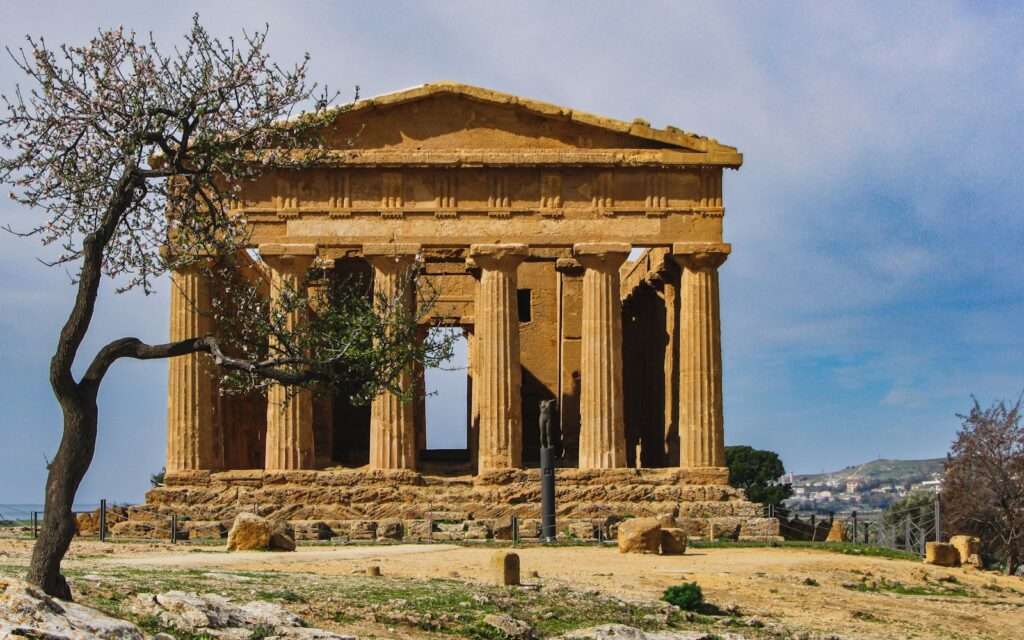
Two hours south, the Valley of the Temples justifies the reach: the best-preserved row of Greek temples outside Greece. It’s actually a ridge, whatever the name says. The Temple of Concordia — intact since 430 BC because a church conversion saved it — anchors a kilometer-long sacred way.
The logistics: it is a long day. Tours run it; independent travelers take the train and local bus and watch the return times. The site is shadeless, so in summer visit in the morning or late afternoon only — and the floodlit evening openings, on summer schedules, are the version people don’t forget. The Kolymbethra garden in the ravine between temples, citrus and olives run by the FAI heritage fund, is the shaded pause the day needs. Add the archaeological museum for the telamon giants, and skip the modern town without guilt.
Read the full Valle dei Templi day-trip page.
The Godfather Question — An Honest Answer
It gets asked constantly, so here is the honest answer. Corleone is a real town ninety minutes south, and The Godfather was not filmed there. By the 1970s it looked too developed, so Coppola shot the “Corleone” scenes in Savoca and Forza d’Agrò — two villages near Taormina, a full island-width away. Bar Vitelli, the church, the wedding walk: all Savoca, all still visitable, and all better done from a Taormina base.
What Corleone actually offers is heavier and arguably more worthwhile: the CIDMA anti-Mafia museum, where the maxi-trial documents and the memory of judges Falcone and Borsellino are kept by guides who tell the real story with controlled anger. It’s a pilgrimage for the seriously interested, not a photo stop.
Sort it this way: movie pilgrims should save Savoca for an eastern-Sicily trip. History-minded visitors will find Corleone’s truth outranks the fiction. Everyone else spends the day at Segesta and loses nothing.
The Palatina, the Markets & Palermo Itself
The city’s own program starts at the Cappella Palatina in the Norman Palace: the royal chapel where gold mosaic meets a carved-and-painted Islamic wooden ceiling — the Norman fusion at maximum density. Book ahead, and check current conditions: restoration work and parliamentary sittings can close sections on some mornings. Then the cathedral’s rooftop walk, the Quattro Canti crossroads, and the Serpotta oratories’ stucco theaters for the connoisseur hour.
The markets are the city’s engine: Ballarò is the rawest and most alive, Capo runs close behind, and Vucciria is now more nightlife than produce. Walk one properly, hungry — because Palermo is Europe’s street-food capital by any honest count. Panelle, the chickpea fritters, go in a roll. Arancine are round here, and the gender of the word is a genuine island-wide dispute. Sfincione supplies the spongy tomato squares, and pani ca meusa — the spleen sandwich — is the initiation rite locals will watch you attempt with open delight.
The counterpoint visits: the Capuchin Catacombs hold 8,000 mummified Palermitans in their Sunday clothes — macabre, oddly tender, not for every temperament, and unforgettable for the right one. Mondello, the city’s Liberty-era beach twenty minutes out, handles the swim day without any train at all.
Frame the city honestly: Palermo runs loud, faded-grand, and gloriously unrestored. Travelers wanting Taormina’s polish should recalibrate or reroute. Travelers who let the chaos in tend to rank it the best city in Italy by the time they leave.
Full day-trip pages: Segesta.
Frequently Asked Questions
Is Monreale worth it from Palermo?
Essential — twenty minutes for 6,400 square meters of gold mosaic, the cloister’s 228 carved columns, and rooftop views. Go in morning light, and see the Cappella Palatina on a separate day so both land.
Was The Godfather filmed in Corleone?
No — Savoca and Forza d’Agrò, near Taormina, played Corleone on screen. The real Corleone offers the CIDMA anti-Mafia museum instead: heavier, truer, and worth it for the seriously interested.
Is Cefalù a good day trip from Palermo?
The best train day — an hour to a Norman cathedral, medieval lanes, a real beach, and the Rocca climb for the postcard. Early trains beat the summer crush.
Can you visit the Valley of the Temples from Palermo?
Yes — two hours each way for the finest Greek temples outside Greece. Visit mornings or late afternoons in summer (the site is shadeless), and the floodlit evening openings are the memorable version.
What food is Palermo famous for?
Street food above all — panelle, arancine, sfincione, and the spleen-sandwich initiation — best in the Ballarò and Capo markets. Come hungry; it’s the cheapest great eating in Italy.